Why Behavior Moves First: Using Simulations to Prove Capability Before Metrics Refinement
Edmundo Barrientos · 2026-09-30 · 3 min read
TL;DR: Business results lag months behind training. Behavior shifts first, and a simulation captures it in session one. Repeatedly, the behaviors become the capabilities that prove impact early.
The Quarter-Long Waiting Game
A VP of L&D rolls out an onboarding initiative in January. By March, the board asks for proof of success. The business metrics have not moved.
Meanwhile, most teams report learner satisfaction and completions. As Cheryl Jackson and Peggy Durbin highlight in Chief Learning Officer, such figures track activity, not impact. Behavior change, they argue, is where learning becomes real. They recommend leading indicators like reduced hesitation and faster decisions.
They add that AI makes tracking behavior at scale possible. We go beyond the screen. Key behaviors often involve hands-on equipment, and a simulation can rebuild that too.
To be clear, this is not necessarily virtual reality: no headset, no 3D model of the equipment. The simulation is a conversation with an AI that plays the situation. It describes what the learner sees, the learner says what they would do, and it reacts.
A coffee machine as a test bench
A café chain onboards 40 new baristas on an espresso machine. A simulation turns the real machine into a scenario. The learner gets an order for two lattes and a growing line. Then a warning light asks for a milk cleaning. The simulation watches what they do, not what they know:
- Do they check water and beans before the first shot, or only after a failed one?
- Do they stop for the warning light, or ignore it to serve the line?
- When a step is unclear, do they look it up, guess, or ask?
- How long do they hesitate?
Each answer is a behavior you can score. None appears in a completion report, and each shows up weeks before wasted milk or a customer complaint.
Scaling to Higher-Stakes Scenarios
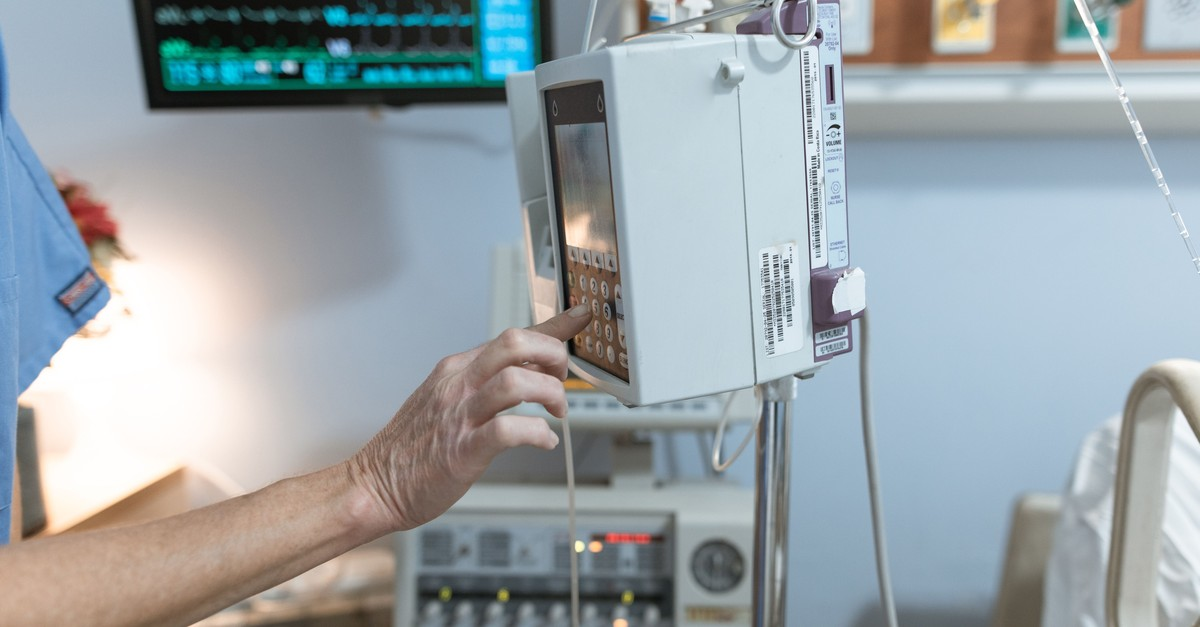
Consider critical settings, such as medical devices. A hospital deploys a new infusion pump. A nurse must program the dose, verify the drug, and clear blocked-line alarms. Spare pumps are scarce, and practicing on live patients isn't an option.
Simulation is the only risk-free place to practice these actions before real work. Does the nurse double-check the dose? Do they find the cause of an alarm, or only silence it? Safety metrics need months and real incidents to show the same.
Turning Observable Behaviors into Organizational Capability
True capability-building happens when knowledge becomes consistent practice. One simulation is only a snapshot. Run it again a month later at the same difficulty. You see if actions such as the dose check become habits. Ward audits or waste logs then confirm it on the job.
Measurable behaviors add up to a reliable organizational capability. And strategic planning depends on measurement.
Hospital staff already know the dosing protocol. The value comes when it becomes a skill that cuts errors and saves time. Simulations do not replace the learning management system or the instructors. Trainers edit and decide what each scenario tests.
When board members ask for progress in March, lead with behavioral data. It shifts long before business metrics do.
Related reading
References
- Jackson, C. and Durbin, P., Chief Learning Officer. Beyond basic metrics: Proving impact before business metrics move, 2026.
About the publisher: this article is published by Grasply (grasply.ai), a capability builder. Grasply turns what a company already knows, its docs, calls and recordings, into skills people use at work, for employees, partners and customers. Practice turns knowing into doing, and Grasply shows proof that the work changed.